

Interview: Cherrie Lo on Luxury Chocolate and Sustainability

I had the privilege to interview Cherrie Lo 盧曉婷 who is a Chocolate Expert, Board Member and Grand Jury at the Academy of Chocolate Awards, UK Concierge Marketing & Business Manager at Fortnum & Mason, and Board Member at the Hong Kong UK Business Forum. Cherrie shared her inspiring expertise, in selecting the finest Chocolate products, and her multisectoral vision highlighting the importance of cultivating a sustainable approach to our relationships with our favourite brands, in the Chocolate value chain.
Why did you want to become a Chocolate expert?
My chocolate journey began in 2009 with my first job in the industry. Ever since I have been passionate about sharing my love for chocolate and introducing others to the world of fine chocolate. Teaching people how to appreciate the nuances of a piece of chocolate and how to properly taste it has been a joy for me. Through my experiences working with various brands and chocolatiers, my knowledge and appreciation for chocolate have grown. I am now not only interested in simply tasting chocolate but also in delving deeper into the theory and making process behind it and tasting chocolate with a professional perspective and level of expertise.
What were your challenges when you started your career in the Chocolate industry?
I used to struggle to articulate all the tasting notes that I perceived when tasting chocolate. Despite recognising familiar flavours, I often found it difficult to accurately describe them. Additionally, many people see chocolate as a cheap, mass-produced supermarket product and may not understand how to appreciate its complexity. It takes time to break their habit from munching on chocolate and guide them towards savouring it, discovering their palate, and identifying each flavour note.
How would you define your leadership style, using three adjectives?
Approachable
I prioritise being available to my team whenever they require my assistance. I believe that my time is no more valuable than anyone else’s, and therefore, I make myself approachable to my colleagues. Whether they have doubts, questions, or new ideas they wish to share, I am always willing to lend an ear and offer guidance. It is essential to me that my teammates feel comfortable speaking candidly and openly about their thoughts and feelings.
Compassionate
It is important to have empathy towards others. As Caroline Flack, who tragically took her own life due to immense pressure from the media and life, once said, “In the world where you can be anything, be kind.” This quote has stayed with me and serves as a constant reminder to be compassionate and inclusive towards others. When you are empathetic, you are more open-minded and accepting, and you will listen to your colleagues and understand their perspectives. This allows you to be more collaborative and understand where they are coming from.
Empowering
Each person possesses their own strengths and weaknesses, unique talents and abilities. Therefore, it is crucial to remind and encourage our team to reach their full potential. When they feel confident, trusted, and valued, they become more focused and dedicated to building their career. This, in turn, leads to a more successful outcome with great confidence, like having a halo on their head. Moreover, people influence people, and when one team member feels positive and strong, it positively impacts the entire team, making them more resilient and united.
What are your criteria to distinguish a fine chocolate product?
Quality of ingredients: Fine chocolate is made with high-quality cocoa beans, cocoa butter, sugar, and other ingredients. The quality of these ingredients can greatly impact the taste and texture of the chocolate.
Cocoa content: The percentage of cocoa in a chocolate bar can vary greatly, and it is often an indicator of the chocolate’s quality. Fine dark chocolate typically has a higher percentage of cocoa, which contributes to a richer, more complex flavour profile.
Bean origin: The origin of the cocoa beans used to make the chocolate can also impact the flavour and quality. Craft chocolate makers often use beans from specific regions known for producing high-quality cocoa.
Production methods: The way the chocolate is produced, including the roasting, grinding, and conching processes, can also affect the flavour and texture of the final product.
Taste and texture: Ultimately, the taste and texture of the chocolate are the most important factors in distinguishing a fine chocolate product. Fine chocolate should have a complex, nuanced flavour profile, with a smooth, creamy texture and a pleasant mouthfeel.
Craft chocolate refers to chocolate that is handcrafted in small batches using traditional techniques that preserve the flavours of the cocoa bean. Craft chocolate makers typically source high-quality cocoa beans from small farms or cooperatives, and often highlight the unique flavours and characteristics of the beans, such as notes of fruit, nuts, or spices. Craft chocolate is often more expensive than industrial chocolate due to the smaller scale production methods and higher quality ingredients.
Industrial chocolate, on the other hand, is produced on a large scale using modern machines and processes. Industrial chocolate makers often use cocoa beans from multiple sources, and the beans are typically roasted and processed to remove any unique flavours or characteristics. Industrial chocolate is often used in candies, chocolate bars, and other mass-produced chocolate products, and is generally less expensive than craft chocolate.
Which countries are the biggest cocoa producers?
According to the data from the International Cocoa Organization (ICCO) for the 2020-2021 cocoa season, Ivory Coast, Ghana, and Cameroon were the top three cocoa-producing countries, with Ivory Coast producing over 2 million metric tons of cocoa beans. Other significant cocoa-producing countries in 2020-2021 included Nigeria, Ecuador, Peru, and Brazil. It is important to note that cocoa production can vary from year to year based on various factors such as weather patterns, political stability, and market demand.
What’s the role of women in cocoa farming around the world?
Women play a significant role in cocoa farming around the world. In many cocoa-producing countries, women make up a large portion of the agricultural workforce and are involved in various stages of cocoa production, from planting and harvesting to post-harvest processing. However, despite their crucial contributions, women often face significant challenges and barriers to full participation in the cocoa industry.
These challenges can include limited access to land, credit, and training, limiting their opportunities and decision-making power. Efforts are being made by some organisations and governments to address these issues and promote gender equality in cocoa farming, such as providing training and resources specifically for women farmers, supporting women-led cooperatives, and advocating for policies that promote gender equity. By empowering women in cocoa farming, by supporting small craft chocolate businesses that are stretching themselves to ensure farmers who grow their beans are being paid fairly so they can sustain their farming and business, we can help to create more sustainable and equitable cocoa supply chains and improve the livelihoods of cocoa-growing communities.
Which are the finest luxury Chocolate brands?
In the UK, Dormouse, an award-winning chocolate maker, produces amazing chocolate bars. While Eponine, also an award-winning chocolatier, creates fantastic chocolate bonbons.
In France, I thoroughly enjoy the bonbons from Le Chocolat Alain Ducasse and the chocolate bars from Chocolat Bonnat and Chapon.
In Japan, Es Koyama creates innovative flavours of both chocolate bars and chocolate bonbons.
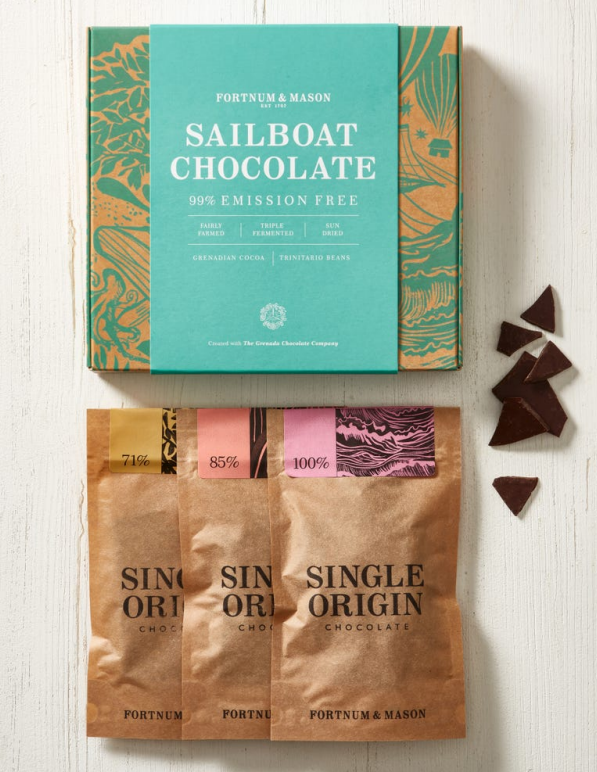
Fortnum & Mason has also proudly introduced the world’s first ’farm to store’ 99% emission-free chocolate slates, expertly crafted by the Grenada Chocolate Company and in partnership with Chantal Coady OBE. It has been a long journey to reach us here in Piccadilly, travelling all the way from the Caribbean by a fleet of wind-powered sailing boats, horse-drawn carriages and electric vans. Along the way, the chocolate was broken down, tempered and packaged at one of the oldest chocolatiers in Ireland, NearyNógs.
Tucked inside the fully-recyclable box are three naturally-grown, certified organic chocolate slates – made from fine flavour Trinitario Cocoa Beans and featuring ascending levels of cocoa solids.
Read the full story about Fortnum & Mason Sail Boat Chocolate
What are your favourite F&M Chocolate products?
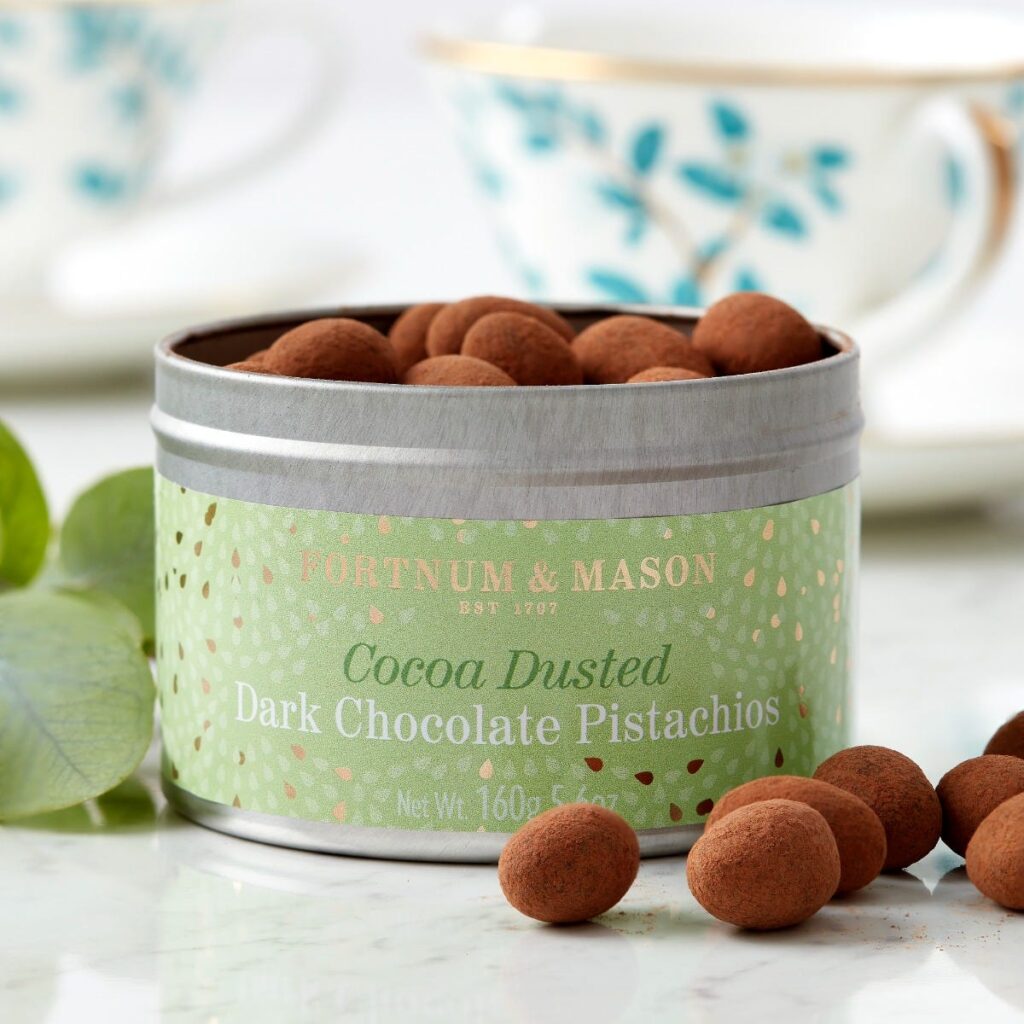
It’s going to be really hard to pick one, but I always love Fortnum’s Cocoa Dusted Dark Chocolate Pistachios. They are handmade in the UK. Lightly roasted and perfectly salted, each pistachio is enrobed in a rich dark chocolate and finished with a light dusting of cocoa. Best enjoyed alongside a warming cup of our very own Royal Blend. These deliciously indulgent almonds are the perfect after-dinner treat.
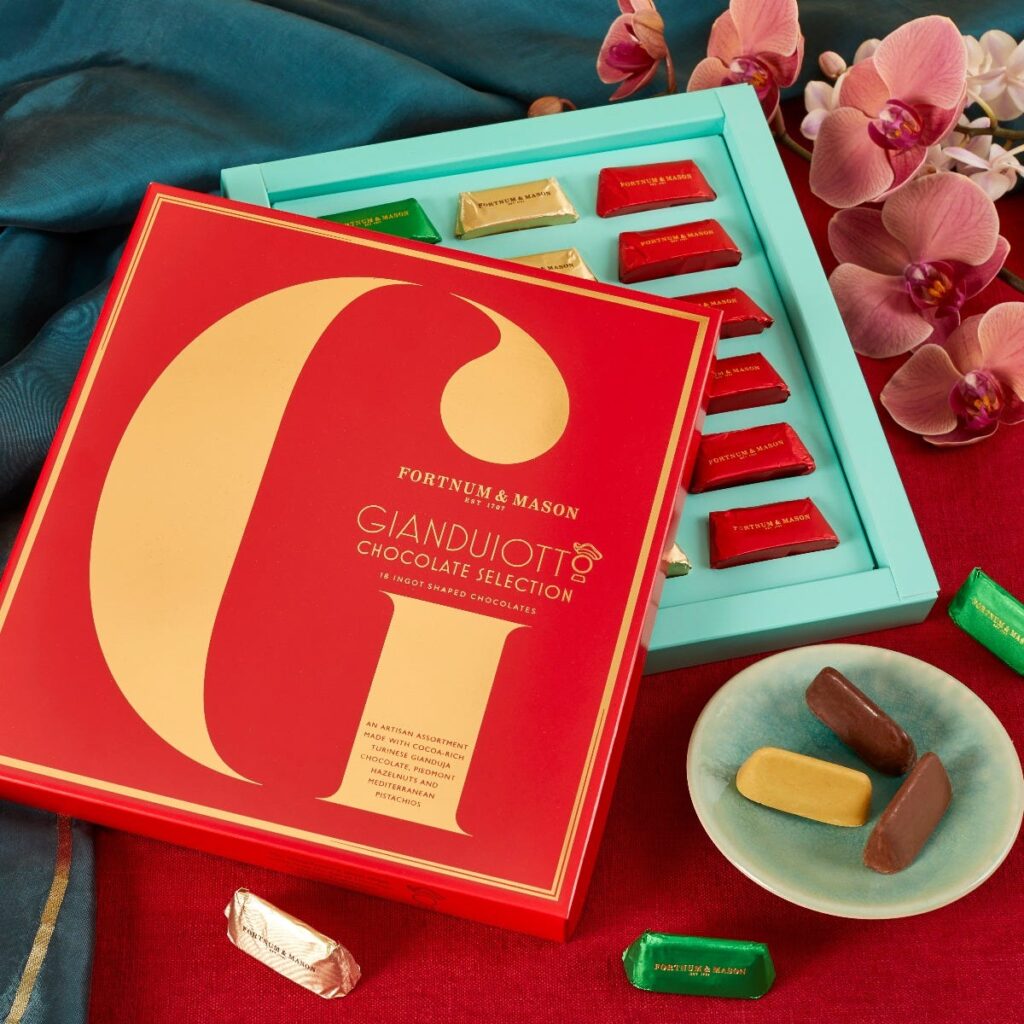
Another one I really enjoyed is Gianduja Chocolate. Gianduiotto Gianduja Chocolate Selection Box is exclusively produced in Turin, one of the original birthplaces of Gianduja chocolate, by artisans with generations of inherited experience.
Why did you decide to move to London?
In 2016, at that time I had already worked in the chocolate industry for 7 years. Through hosting various chocolate-tasting and whisky-pairing events, I was able to develop my professional knowledge and expertise. However, upon reflection, I realised that most of what I was saying during these events was only about the brand story and philosophy. I yearned to go beyond the surface level and understand the essence of chocolate, like – how chocolatiers and chocolate makers chose specific ingredients to pair with a specific single-origin chocolate. With what mechanism they choose to make 72% dark chocolate but not 68% Etc.
My desire to learn and develop professionally motivated me to search for courses and training programs that could help me become a more knowledgeable chocolate connoisseur. Through my research, I discovered a thriving chocolate community in London, where craft chocolate was blooming and various chocolate awards were being held. And I’ve then purchased my one-way flight ticket and moved to London – for Chocolate!
Without any family, a place to live, or a job in London, I guess it was quite a bold move and brave decision to move there with only a one-way flight ticket and 72kg of luggage (what a coincident as my favourite 72% dark chocolate!), with the sole goal of training myself to become a more professional chocolate taster.
What are the most inspiring aspects of your role as a Concierge Marketing & Business Development Manager at Fortnum and Mason?
The synergy, willingness, and team spirit that my colleagues demonstrate every day stand out to me. They are always eager to lend a helping hand to one another, going above and beyond what is expected of them, and staying until the very last minute to ensure the success of large events. It is the accumulation of these small acts that makes me feel incredibly grateful to be a part of such a dedicated and supportive team.
What initiatives has F&M implemented to promote sustainability?
As a family-run business that’s been around for over 300 years, we are always looking for new and inventive ways to conduct our business in a way that is sustainable for all of us over the next 300.
We have four sustainability and social responsibility pillars: People, Product, Packaging and Planet. These drive our commitment to doing more things more often to create long-lasting change, with the help of our suppliers, employees and customers.
Goodbye Palm-Oil
Since the end of 2019 we no longer manufacture any food products containing sustainable palm-oil under our brand – and, naturally, the taste is still delicious.
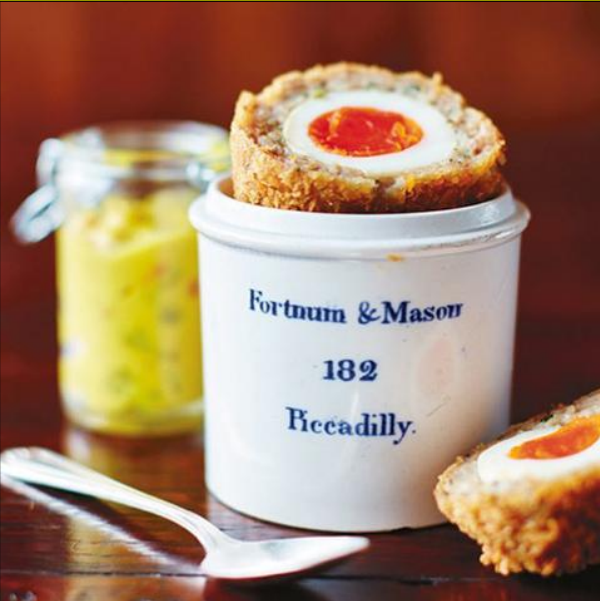
GM Free-Food
Since 2002 our own-label food has been free from genetically modified ingredients, and we monitor all our suppliers to ensure this is maintained.
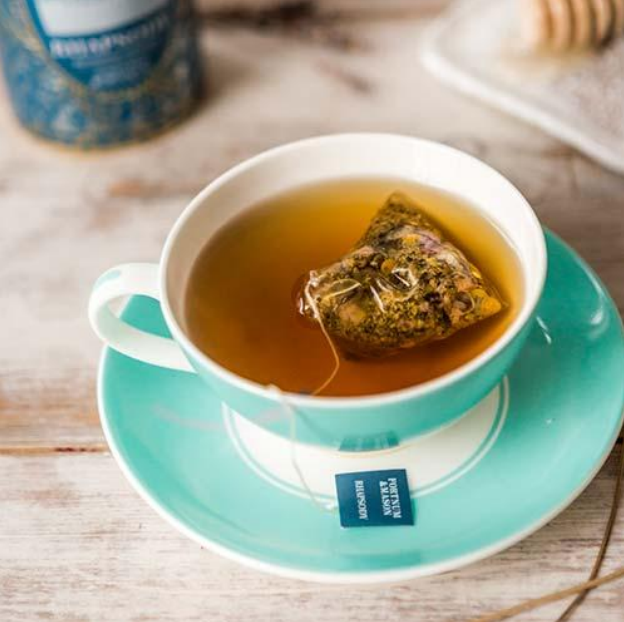
Plastic-Free Teabags
We’re happy to say that as of this year, all of our teabags are plastic-free and completely compostable, while the tea itself acts as a great nitrogen-rich soil fertiliser after you’ve finished your cup. And next up, we’re working hard to eliminate plastic from our packaging too, with trials of compostable alternatives already underway.
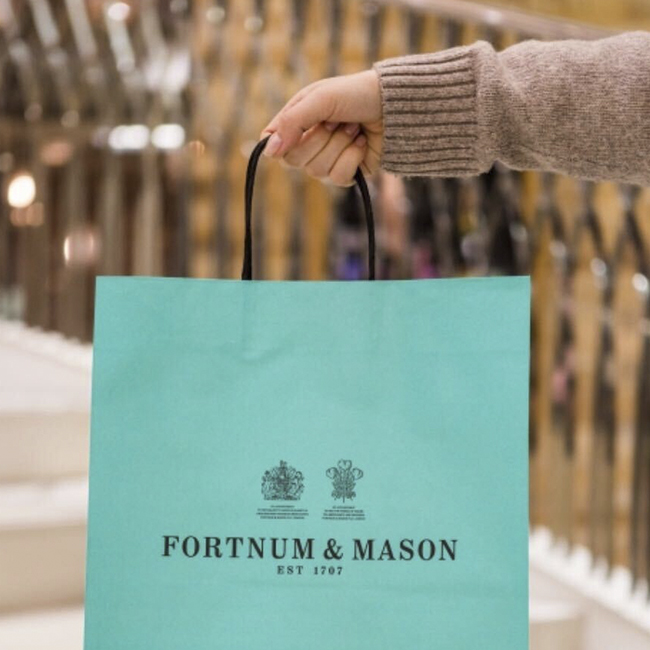
Phasing Out Single-Use Plastic
We’ve removed 140 tonnes of single-use plastic from our stores and products, each and every year, forever. Over the coming months, we will replace our Food Hall bags with chlorine-free paper ones, whilst plastic-free gift bags, boxes and ribbons aren’t far behind.
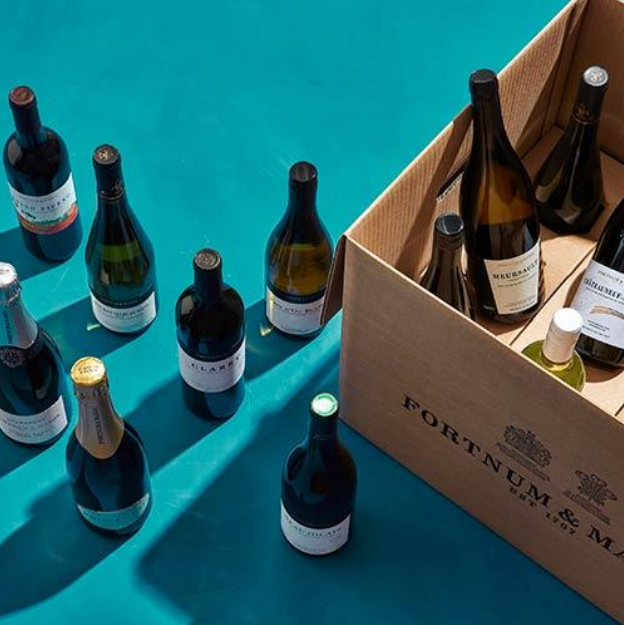
Recyclable Packaging
Currently, 76% of our packaging is recyclable. We are increasing the recycled content in all our packaging so that on average 50% of it will be recycled. All of our delivery box outers, made in Suffolk, contains 66% recycled content, while for a number of key products the packaging will soon be made with 100% recycled content.
What are the requirements for Chocolate labelling in the UK?
Certain cocoa and chocolate products must comply with the reserved descriptions set out in the Cocoa and Chocolate Products Regulations 2003. The rules lay down the composition of cocoa and chocolate products including setting minimum ingredients and specific labelling requirements. The amount of cocoa solids and milk solids that must be present are stipulated, as well as allowing only certain additional ingredients to be added. A cocoa solids declaration such as an X% minimum is required for most chocolate products covered by the rules and where appropriate a milk solids declaration is also required. This enables consumers to make informed decisions about the type of chocolate they want to buy.
What are the most important stages of the Cocoa Supply Chain, from farmers to consumers?
Before Cocoa Beans can be used in chocolate, cocoa beans must undergo a series of processing stages.
Harvesting, Fermenting, and Drying
Initially, cacao farmers collect cocoa beans by plucking pods from cacao plants. Subsequently, they heap the beans for fermentation and use banana leaves to cover them. Following this, farmers dry the beans and pack them up for transportation within the country.
Domestic Transportation and Exporting
Packaged cocoa beans are transported domestically by transporters to either cleaning warehouses or processing factories. Once there, the cocoa beans undergo preparation processes to make them export-ready for transportation to chocolate production hotspots around the globe.
Processing and Chocolate Production
Cocoa processing firms carry out winnowing, roasting, and grinding of cocoa beans to create cocoa liquor, cocoa butter or cocoa cakes. These products are then combined with other components, such as sugar and milk powder, to create a variety of chocolate products. Cocoa production and trade form the foundation of the chocolate industry, and the continuous, reliable supply of cocoa is crucial in ensuring that chocolate is affordable for consumers.
What are your biggest achievements in the Chocolate industry?
Since 2017, I have had the privilege of serving as a Grand Jury and Chocolate Judge for prestigious awards such as the Academy of Chocolate Awards, International Chocolate Awards, and the Great Taste Awards. Additionally, I am honoured to now serve as a Board Member of the Academy of Chocolate. During my time as a judge, I have had the opportunity to travel around the world and work alongside incredible food writers and experts in the industry. It has been fascinating to judge chocolate from different parts of the world, where local ingredients are used as a tribute to their heritage, agricultural practices, and food culture. As a result, I have been able to introduce exceptional oriental flavours and ingredients to the Western judges, building strong bridges across the chocolate communities.
Through this, we can all celebrate each unique creation and the chocolate experts’ know-how from around the world.
Humus4change Copyright © All rights reserved.