
How to include a Sustainable Packaging Value Chain in your CSR Strategy
It’s interesting to think about how the idea of sustainable development first gained traction at the 1972 United Nations Conference on the Human Environment in Stockholm. Back then, people were starting to talk about how everything in our world – like the environment, economy, and society – is connected. But it’s taken a while for this idea to really catch on. It seems like only recently that we’ve started to take sustainability seriously, realizing that we need to live in a way that doesn’t harm the planet for future generations.
Sustainability is everywhere these days, from big companies to small community projects, showing that we’re all thinking differently about how we live and do business. It’s not just about the environment anymore – it’s about making sure we’re all better off in the long run. Businesses are trying to be more ethical, activists are raising awareness for the protection of our natural resources, and cities are trying to make life better for everyone by going green. From how we grow food to what we teach in schools, sustainability is changing the game. Even us consumers are getting more involved, demanding products that are good for the planet and fair to workers and their communities.
Sustainable packaging is becoming a big deal too, as more companies opt for eco-friendly materials for more efficient waste management. We’re all waking up to the fact that we need to look after our home if we want it to look after us.
Ecology (Eco + Logos = Study of the Home)
The Role of the Product Life Cycle and Fair Trade in the Circular Economy
We are reflecting more about the whole product lifecycle of what we buy, where the materials come from, how many resources are needed to produce the items we buy and what processes are involved.
What’s the difference between a sustainable product and an ethical product?
Sustainable products prioritize environmental impact, while ethical products encompass social and labour considerations. Sustainability focuses on ecological concerns, while ethics emphasize social responsibility. Products can be sustainable without being ethical, ethical without being sustainable, or ideally both.
Sustainable Product (Definition): A sustainable product refers to an item or service designed and produced in a way that minimizes environmental impact throughout its lifecycle. This includes considerations such as resource conservation, reducing carbon emissions, and minimizing waste generation.
Ethical Product (Definition): An ethical product goes beyond environmental concerns to encompass social and moral considerations. This includes fair treatment of workers, adherence to labour laws, humane working conditions, considerations for animal welfare, and cultural sensitivity in production practices.
Fairtrade (Definition): Fairtrade refers to a movement that aims to promote equity and sustainability in international trading relationships, particularly in developing countries. Fairtrade principles advocate for fair wages, safe working conditions, and environmental sustainability, ensuring that producers receive fair compensation for their goods while respecting their rights and protecting the environment.
Supporting Fairtrade and Ethical production practices can have a big impact. Consumers are seeking out products that ensure fair wages and ethical treatment of workers, along with selecting items with minimal packaging or made from sustainable materials. They’re even getting into sharing or rental services to promote resource optimisation and cut down on consumption. Oh, and fast fashion? It’s getting the boot as more folks lean towards timeless, quality clothing items that last longer and have less of an impact on the environment.
Ethical Branding Examples in the Fashion Industry
Patagonia: Known for its outdoor clothing and gear, Patagonia is committed to environmental sustainability and ethical production. The company uses recycled materials, promotes fair labour practices, and supports environmental activism through its 1% for the Planet program.
Pact: Pact is a fair-trade clothing for the entire family. The whole supply chain practices sustainability – from growing and harvesting non-GMO cotton to creating the final pieces. They work with Fair Trade USA to ensure that workers are paid fair wages and operate in safe working conditions.
Eileen Fisher: Eileen Fisher is a women’s clothing brand that focuses on sustainable and ethical fashion. They use organic and eco-friendly materials, implement fair labour practices, and prioritize transparency in their supply chain.
Rapanui: Award-winning sustainable clothing designed for the circular economy. Made from natural materials, using renewable energy. Inspired by coastal living.
Birdsong: Launched in 2015, Birdsong is a BCorp-certified cult fashion brand and award-winning social enterprise.
People Tree: Launched in September 2021, People Tree is the Fair Trade and sustainable fashion pioneer.
Veja: Since 2005, VEJA has been creating sneakers in a different way, mixing social projects, economic justice, and ecological materials.
Finisterre: Discover consciously built outerwear, hardy knits and year-round adventure essentials, born from a love of the sea. B Corp Certified.
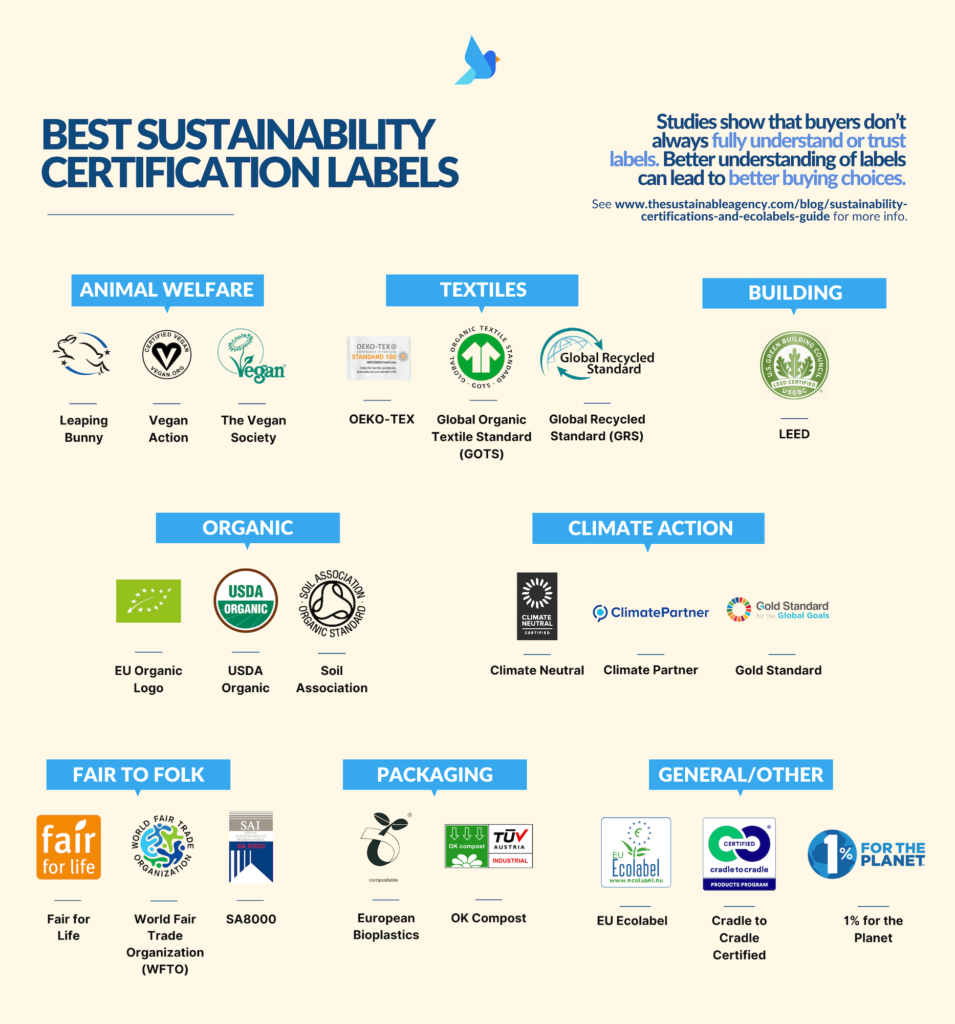
The Importance of Ethical Labelling in Sustainable Shopping
At the end of the day, it’s about making informed choices that reflect our values. By checking for certifications like FSC or USDA Organic and supporting brands that meet environmental and ethical standards, we’re not just shopping – we’re making a statement about the kind of world we want to live in. And that’s pretty empowering.

Change in Consumer Behavior
Consumers now prioritize sustainability more when selecting products, compared to two years ago.
Shopping these days isn’t just about grabbing what you need – it’s about making choices that have a positive impact on the planet and our communities. You’ve got folks bringing their own bags to the store, prioritizing local businesses to cut down on transportation emissions and support the neighborhood economy. Plus, customers are getting savvy about choosing durable products that last longer, reducing waste and the need for constant replacements, opting for repair and refurbishment instead of always going for something brand new.
Sustainable products currently hold a 17% market share and exhibit a growth rate of 32%.
Items marketed as sustainable grow 2.7 times faster than those that are not.
75% of sustainable goods perform better in online sales compared to in-store.
78% of consumers consider sustainability important in their purchasing decisions.
62% of people actively seek out sustainable products during their shopping.
55% of consumers are willing to pay a premium for eco-friendly brands.
84% of customers state that poor environmental practices would lead to disengagement from a brand or company.
Reasons to Switch to Sustainable Packaging
There are several compelling reasons for businesses to switch to sustainable packaging and embrace sustainability, including Brand Reputation and Supply Chain Management [1]:
Eco-friendly Impact: Reduce your environmental footprint with responsible packaging for a healthier planet.
Captivate with green initiatives: People love brands that care about the planet, so embracing sustainability can attract eco-conscious consumers and make your brand stand out.
Avoid Headaches, Follow the Rules: Embracing responsible packaging isn’t just good for the Earth; it’s also a smart move to stay on the right side of regulations.
Cost savings: While there might be some upfront costs, sustainable practices can actually save money in the long run by cutting down on waste and material usage.
Future-Proof Your Brand: Position your brand as forward-thinking by adopting responsible packaging to meet evolving consumer and environmental expectations. Sustainability isn’t going away anytime soon, so getting on board now helps future-proof your business for whatever comes next.
What sustainable practices can businesses start implementing?
If you’re looking to make your business more eco-friendly, here’s a laid-back guide to get you started:
Take a look around: Start by checking out how things are running in your company. Are there areas where you could be more eco-friendly? Think about energy use, waste management, and where your products come from.
Set some goals: Time to get specific! Figure out what you want to achieve – maybe it’s cutting down on carbon emissions or finding more sustainable suppliers. Whatever it is, make sure it lines up with your company’s values.
Invest wisely: It’s time to put your money where your mouth is. Consider splurging on energy-efficient gear and making sure your supply chain is as ethical as possible and contributes to your Corporate Social Responsibility (CSR) strategy.
Get everyone on board: Sustainability is a team effort! Get your employees involved by chatting about your company’s ESG practices and providing some ESG training on Sustainable Packaging.
Keep tabs on your progress: Don’t forget to keep track of how you’re doing. Keep an eye on your sustainability metrics and tweak your strategies as needed.
Get creative: Why not shake things up a bit? Think outside the box and come up with some innovative ways to create an eco-friendly marketing campaign to engage your customers. Who knows, you might even stumble upon the next big thing!
Spread the word: Last but not least, make sure everyone knows what you’re up to. Tell your customers, investors, and anyone else who’ll listen about your awesome sustainability efforts.