

Organisational Resilience Practices for Workflow Management and ROI
As Spring is approaching we are getting ready to reflect, measure and evaluate the return of our investments by assessing our Organisational Resilience.
What’s Organisational Resilience?
The concept of Resilience within a Business is referring to its Resource Management and Resource Optimisation.
How do we optimise our Business Resources?
An effective Business Resilience Strategy integrates workflows, financial assets, capital, adaptability, risk management, supply chain management, business operations and change management.
What’s an Investment?
An investment is a value we add to various projects that include products/services for the management of the resources that can increase profit/return but also optimise the company’s goals and results.
What is the Risk and control self-assessment (RCSA) process?
The risk and control self-assessment (RCSA) process assesses and examines operational risks and controls. All business objectives must be met within a reasonable amount of time.
Risk Assessment Formula
It is vital to incorporate Risk assessment into every stage of the project lifecycle for Business Continuity.
Risk = threath x vulnerability x impact
r (neg) = tvi
Risk = opportunity x exposure x impact
r (pos) = oei
Identify downside risks and upside risks
Assess risks
Grade risks
Order risks
Prepare and review the risk report
Implement Enterprise Resource Planning (ERP)
Create an effective Change management strategy
Identify the impact of the change
Prepare the workforce for the change
Commit to the change
Workflow Management Strategies
Workflows are at the core of every business. We should always identify, monitor and manage them as they are driving our business forward. Workflow Management relies on data management that combines a variety of documents and reports.
Inventory Checklists play a vital role in Workflow management.
An inventory Checklist is used to keep track of the items stored in particular areas or departments in a company. This document is frequently used for inspections since it contains a list of every item in the inventory.
Keeping our Inventory Checklist efficiently updated is a vital practice because it enables us to have control over our resources and products, it gives us the ability to assess how our items perform, what’s available, what’s selling and what’s used as well as reducing our carrying costs. In addition, it’s required for income tax reporting.
Total Asset Turnover and Capital Intensity Ratio
A Business’ Turnover is determined by how quickly it runs its operations and it’s most commonly used to assess how quickly a company collects payments from clients or how rapidly its inventory is sold.
Using our assets efficiently is a crucial part of running a successful business.
The Capital Intensity Ratio and Total Asset Turnover are two closely linked financial statistics that indicate how effectively we use our assets to produce revenue.
In fact, the only two independent variables in each formula are total assets and sales.
The link between these two variables is depicted in these formulas in a different way.
Annual sales divided by total assets equals Total Asset Turnover.
The Capital Intensity Ratio shows how many assets our company needs to earn 1 (expressed in our local currency) in revenue. It’s calculated by dividing total assets by annual sales.
According to Investopedia Definition, Capital-intensive industries tend to have high levels of operating leverage, which is the ratio of fixed costs to variable costs. As a result, capital-intensive industries need a high volume of production to provide an adequate return on investment. This also means that small changes in sales can lead to big changes in profits and return on invested capital.
A Return on Investment (ROI) is calculated by subtracting the initial value of an investment from its final value (the net return), dividing the new result (the net return) by the cost of the investment, and multiplying it by 100.
In addition to being an excellent tool for stakeholder engagement and decision making, ROI can also be used to ascertain the efficiency of an investment solution among several options.
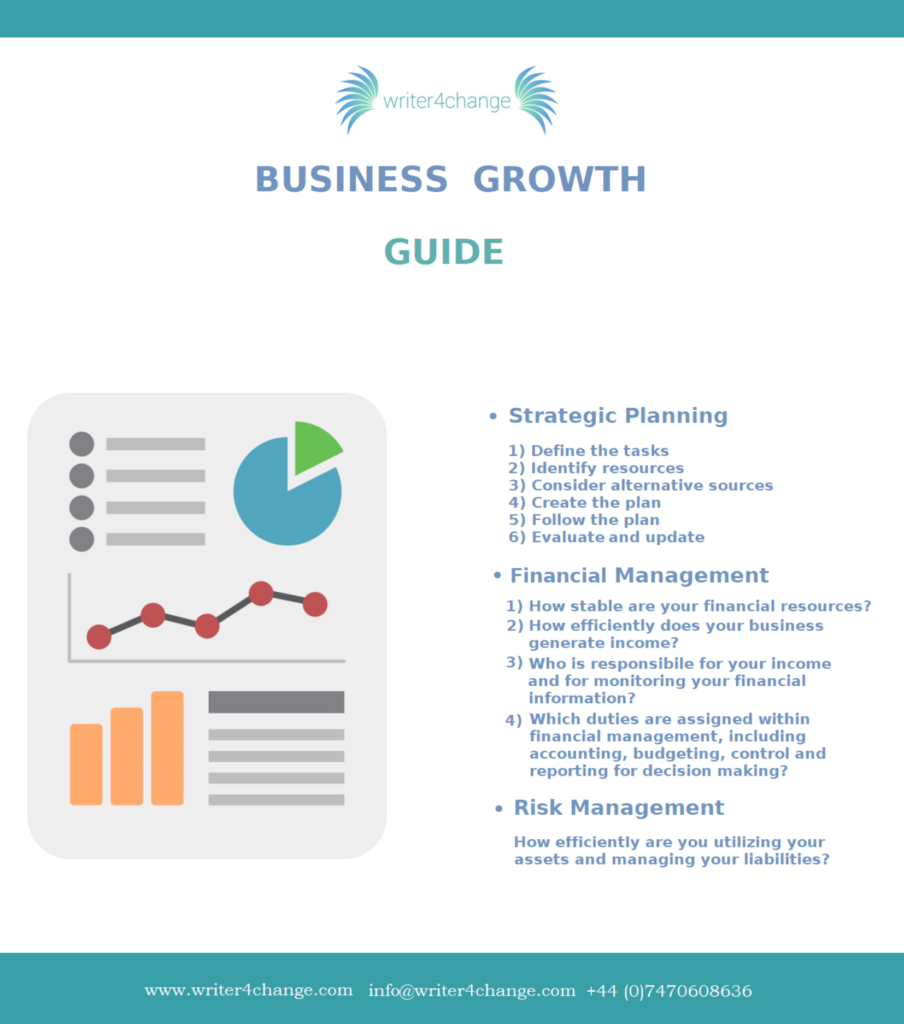
Financial Management and Financial Ratio Analysis
A Capital Intensity Ratio, also called the Efficiency Ratio provides insights into the Financial Health of our Business.
A company’s efficiency ratio measures how well it manages its routine operations. A company’s asset utilisation and its liability management are determined by these ratios. This is a method of determining how efficiently and effectively a firm generates revenue by utilizing its capital or assets.
Our Financial resources depend on the interconnectedness of our Technical resources, Human resources and Social resources for our Supply Chain Management.
Supply-chain management has been defined by the Association for Supply Chain Management (ASCM) as the “Design, planning, execution, control, and monitoring of supply chain activities with the objective of creating net value, building a competitive infrastructure, leveraging worldwide logistics, synchronizing supply with demand and measuring performance globally”.
Investments and financial returns generate the vast majority of our financial resources.
Technological resources include organisational processes, technical skills, and technical expertise. Trust is the foundation of all relationships with stakeholders and social resources.
Our Social Resources are rooted in our organisational resilience which is based on the relationships with our teams, suppliers, partners and customers.
Humus4change Copyright © All rights reserved.