
Workplace Wellbeing
with Lee Chambers

Lee Chambers answers our questions about Collaborative Leadership, Psychological Safety, DEI, Team Performance, and Accessibility.

How can we create a safe and healthy work environment?

How can we build trustworthy relationships with our teams?

What are the best practices to develop self-awareness?

Why is it important to be responsible, accountable, and consistent?
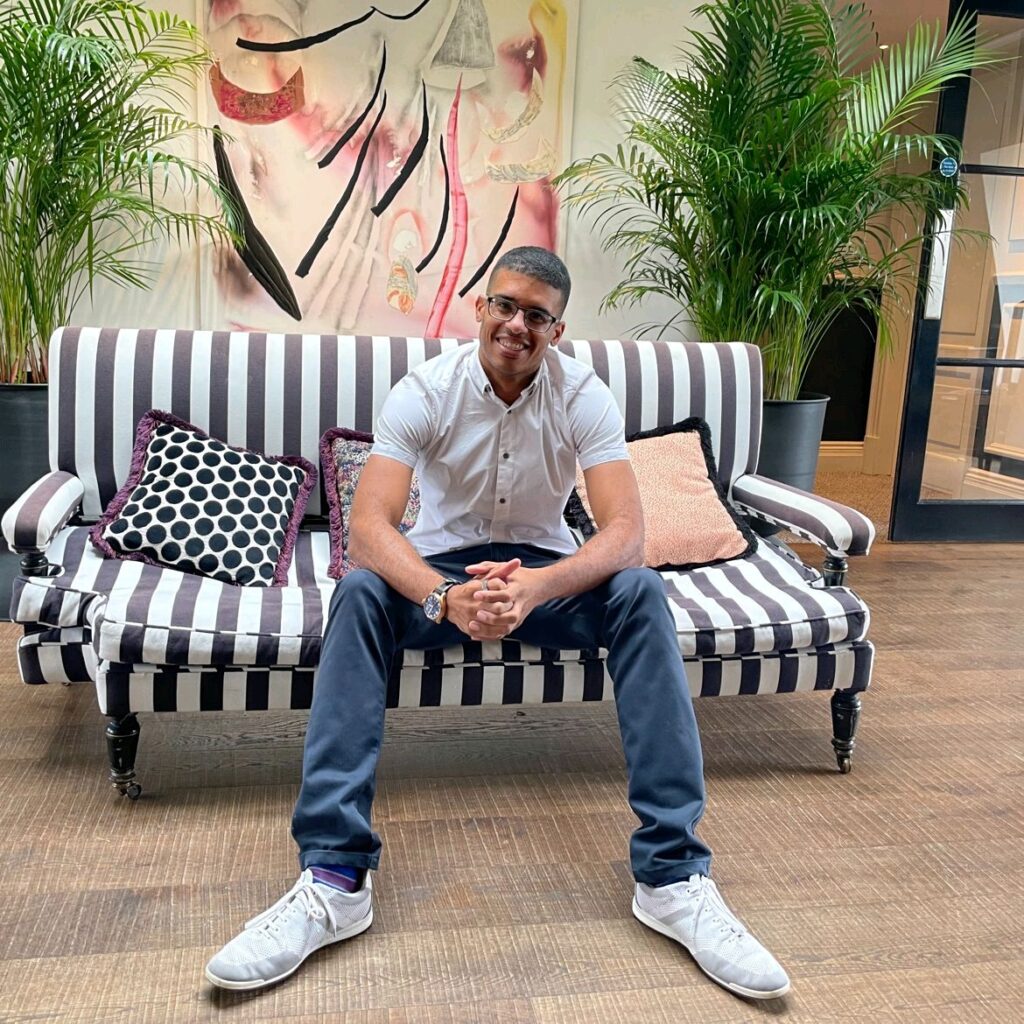
Lee Chambers is a British Psychologist, Entrepreneur, Speaker and Radio Host.
Lee is the Founder of Essentialise Workplace Wellbeing and the Director of Male Allies UK.
Board Member of the CMI Women’s Committee.
Winner of the Manchester Young Talent Awards and HIVE Business Awards.
Winner of the UN Award for Men Allyship work.
Trust as a currency in modern-day leadership
I think the foundation is quite simple: Do what you say you will do, not over-promise and under-deliver on a regular basis.
We need to find that balance between setting expectations, defining roles and letting people be relatively autonomous in making the outputs that they need to achieve.
There are times when leaders have to make decisions at a speed without all the information and that’s where that trust really comes into play. If your teams feel that your decisions are based on looking at how it impacts all stakeholders and out to the wider community, the environment, suppliers and the sustainability of the business, then your decisions will be considered trustworthy.
We foster trust from leaders to teams and also within the teams.
“Rather than trying to be a leader, I try to lead myself.”
How to be a responsible, accountable and consistent leader
Naturally, when we are working within teams there are a variety of different characters coming together with a shared vision and a shared goal.
In the world, as constructed, we have people who would ultimately be assigned to lead those teams selected, based on potential experience or different aspects such as the duration of employment or even people who decide that they will step in to take that position and lead a team and foster that collaboration.
Obviously, that person has a level of responsibility to ultimately hold themselves accountable for how they lead but also hold the team accountable to ensure consistency.
It must be evident that someone acts with a level of certainty as that is who they are rather than who they are pretending to be. It gives us the ability to connect with the person, and sometimes that allows the barriers of hierarchy to be eroded so that a leader can feel like a leader but still be morally present.
Talent Acquisition and Team Performance
We live in an incredibly dynamic and agile world.
We’re quite diverse as a team and I think that there’s been over the past maybe 50 years a big focus on specific skills and experience.
What I honestly look for is people’s talents that they actually enjoy and feel purposeful so they have meaning to really build upon the skills that they’ve already built.
Another big thing for me is attitude, how they approach the world and connect to the wider vision of what we’re looking to achieve. I’ve made an effort not to fall into the trap of culture fit by hiring people who feel like they would just fit in perfectly into the jigsaw but I almost like to look at it as we try to hire people who are culture contributors so they are a little bit different, they have the kind of the talent that they enjoy, they have an attitude that they’re willing to come on a journey and explore.
How to ensure that employees from all backgrounds and abilities can feel psychologically safe
Prepare a supportive environment where your team members feel that they can develop and thrive rather than you expect them to fail.
Foster an experimental mindset, focused on the learnings rather than blame on the failures.
Stimulate your teams to feel comfortable enough to take some risks, evaluate their own mistakes and use them as a part of transformative research.
Obviously, that requires trust initially for people to step outside and try something a bit creative or innovative but once that environment is fostered you can then build those structures and get people to have clarity.
Find that balance between setting expectations, by defining roles but then letting people be relatively autonomous in making the outputs that they need to achieve.
High-performing leaders need to be good Active listeners
Active listening is incredibly effective in leadership as it’s the ability to ask good questions.
“A leader is not the hero but actually the fosterer, empowerer and enabler of other people.”
When you build relationships and it’s built on trust as a foundation and that trust is maintained it gives teams the autonomy to be able to go and do great things.
Developing self-awareness in the workplace requires a multi-faceted approach
Reflection on experiences is important, and an ability to seek learnings and lessons from these from multiple sources creates a more expansive view. Directly seeking feedback plays a significant role, and creating an openness to this feedback, both positive and constructive, can support in building awareness. Understanding our strengths, weaknesses and nuances can help, and there are a variety of ways to do this practically. Writing key plans and priorities can give clarity on ambitions and influences, and actively working on skills that help us to respond, rather than react, can give the space for reflection and questions and awareness of our actions.
The most common challenges and unconscious biases associated with autism in the recruitment process
Neurodiversity awareness is still low in many sectors and organisations. Common challenges are the traditional structure of interviews, often heavy on communication and lower of showcasing technical skills. Job descriptions still often have a heavy focus on strong communication and teamwork, which can leave autistic individuals feeling that the job isn’t for them, and roles don’t always require these. Adverts can also be ambiguous and lack clarity and challenges around disclosure and stereotyping still exist. The biggest challenge is the lack of reasonable adjustments.
The difference between a learning disability and neurodiversity
Neurodiverse conditions are not a learning disability but can affect learning. They are distinct, yet do have similarities, such as being lifelong without a cure, impacting the way they see the world and is present from childhood.
Neurodiverse conditions can impact the processing of information, communication, senses and thinking.
A learning disability is a condition which impacts learning and the connecting of information.
Essentialise was inspired by a variety of aspects:
Firstly, my lived experience of adversity and health challenges made me passionate about creating organisational cultures where people can thrive.
Secondly, my experiences in the workplace and knowledge of human performance and health made me realise how organisations were struggling to create meaningful change and engage their teams in effective well-being.
Thirdly, the workplace wellbeing sector lacks diversity, and I wanted to be part of creating more inclusivity and diverse perspectives in the field.
And finally, I have a vision where work can be a net positive for all those who add value every day, and that requires bringing wellbeing to the fore.
Self-care Routine
Sleep is my number one self-care habit, and I have an AM and PM routine that’s focused on supporting me to be able to give my best to the work that I do. When I wake up I hydrate and wash my face, get some natural light and move my body. I get to the gym to train a few times a week, and in the PM I walk, journal and reflect.
Lee’s biggest achievements
I’ve had a real journey of ups and downs, but when I look back on some of the highlights:
– Having two wonderful, healthy children
– Being entrusted to the board of a dementia charity
– Being selected as a Man for Gender Balance at the Rising Star Awards
– Learning to walk again after illness
– Speaking at the Bloombergs Global Equality Summit
– Winning a Great British Entrepreneur Award in 2021.
Collaborative Leadership, Compassion and Active Listenening: Soft Skills for a Successful Entrepreneurial Journey
During my entrepreneurial journey, I’ve learned many skills, but one of the most important has been how to collaborate with others. I’ve always been passionate and had a desire to make a difference, but in the early days of my journey, I was focused on proving people wrong, as I’d be doubted due to my race and my age. The biggest success of my journey wasn’t the profit or the growth of my business, it was how I grew as a human and became more collaborative, more compassionate and a better listener.
Humus4change Copyright © All rights reserved.
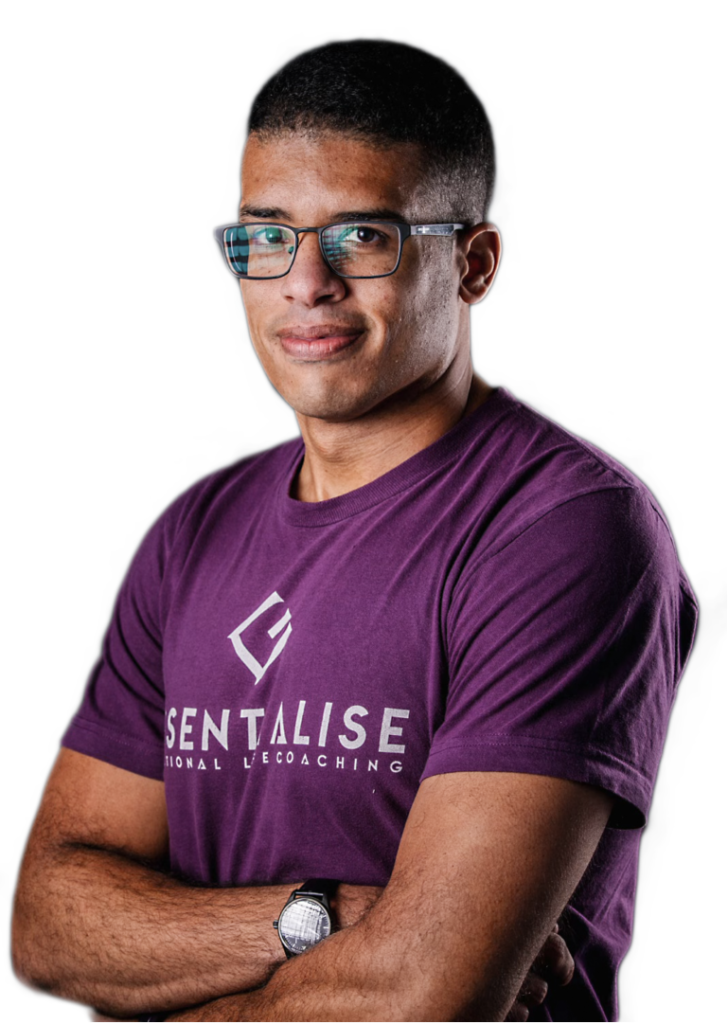
"Accessibility in the workplace is about removing barriers and creating structures to ensure that no individual is excluded from the work they do and the life that work brings."