Interview: Cornelia Walther on Strategic Development for Sustainable Social Change
I was very privileged to have the opportunity to interview Cornelia Walther (PhD) who has been diligently combining praxis and research in her dedicated humanitarian work for the past 20 years. – Cristina Russo

As a humanitarian practitioner, Cornelia worked for nearly two decades with United Nations Children’s Emergency Fund (UNICEF) and the World Food Program in large scale emergencies in West Africa, Afghanistan and Haiti, mostly operating as Head of Strategic Communication, focusing on the design of innovative communication and advocacy approaches.
GALLERY
Podcast episode on ‘The Good Problem’ – Social Change from the Inside Out.
How would you summarise your leadership style?
Organic, optimistic, creative, compassionate, optimisation oriented and change-oriented.
What are your values?
Generosity, Compassion, Honesty, Courage.
Why did you choose a career in Human Rights?
Because I couldn’t see and accept the injustice that surrounds us.
Which were your challenges when you started your career in Human Rights?
Finding entry points, get a chance and proof by added value.
How did you overcome your challenges?
Persistence.
How would you define your experience as Head of Communication at UNICEF, using three adjectives?
Inclusive, Engaging, Inspiring.
Which were the most inspiring aspects of your role as the Head of Communication at UNICEF?
The interaction with people, both those whom I worked for and with.
What are two of your most successful projects at UNICEF?
Each project that helped at least one child live not only a longer but happier life.
What are the most efficient strategies for disaster management and livelihood recovery that UNICEF adopted in countries affected by environmental disasters and wars?
Localized community-based work, combined with high level yet inclusive advocacy that gave space to the voices of young people.
How is UNICEF working to create more equal opportunities, for indigenous children, affected by intergenerational trauma and adverse childhood experiences, in order to make national/international resources more accessible, for social inclusion and cultural identity preservation, according to the art.8 “Preservation of identity” in the United Nations Convention on the right of the child?
Engagement with communities or the design, implementation and monitoring of programs is an important aspect of our efforts for equal access.
Who is the person who inspired you the most in your professional development?
The people whom I met and worked for in various African countries, in Afghanistan and Haiti. Their courage, creativity and resiliency in overcoming challenges was a source of constant Inspiration.
Who is the person with whom you feel the strongest bonding?
Anyone who believes that we need to make the world a place where everyone feels at home.
Do you consider yourself spiritual or religious?
I believe that there is divine energy beyond us, that we are all part of and unites us.
What was your dream job when you were a child?
Change the world.
How can we combine conscious leadership, innovation and resource management in order to prevent the violation of Human Rights around the world?
With the widely shared understanding that everything is connected, happening in a Continuum that links people and the planet.
“In the same way as the individual’s aspirations, emotions, thoughts, and sensations impact each other (micro), the individual impacts the communities he/she is part of (meso), the economic and political context (macro) and hereby the Planet (meta).”
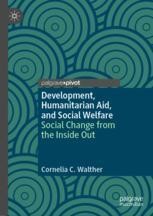
(Development, Humanitarian Aid, and Social Walfare – Social Change from the Inside Out, by C. Walther)
Between 2014 and 2018 during a mission in Haiti Cornelia initiated a multidisciplinary paradigm called POZE.
POZE has a triple meaning. The word poze itself translates as ‘inner peace’ from Creole, the language that is spoken in Haiti.
POZE is an acronym that represents the four outcomes of the logic (Perspective, Optimisation, Zenith, Exposure). POZE is an invitation to Pause, Observe, Zoom in and Experience.
How would you define your experience as the founder of POZE, using three adjectives?
Interesting, Insightful, Inspiring.
Which are the most inspiring aspects of your role as the Founder of POZE?
Experiencing how the POZE Paradigm and the methodologie that derive from it, change people’s perspectives and lives.
What would be your best advice to young entrepreneurs?
Never give up.
Which were your challenges when you started your entrepreneurial journey?
The getting started itself or moving from Idea to Action.
How did you develop your business idea?
It grew organically, starting with the passion for social transformation.
In one of your interviews you mentioned 4 concepts:
– awareness
– acceptance
– alignment
– accountability
How can we integrate these elements in order to bring social change?
This understanding and the consequences that derive from it in terms of personal and collective responsibility must be taught in schools.
How can the corporate industry collaborate with rural communities for a more ethical approach to resource management, in respect of the adequate standard of living according to international human rights law?
Design and deliver with the understanding that everything is connected. The more privileges we have, be they material or social, the larger is our responsibility to use these to help those who are in need.
How can institutions collaborate more effectively with governments and educational systems in order to improve intercultural communication for a more inclusive society?
Respect for the fact that all humans around the world share the same core foundation – we are all a composition of four dimensions, aspirations, emotions, thoughts and sensations. Our material, emotional, intellectual and aspirational needs must be addressed in a holistic manner, that takes into account the social environment that influences us, and which we are influencing in return.
What’s the relationship between implicit law, international human rights law and public policy?
Everything is connected and the same human values must infuse and link these three arenas of influence on people’s life.
How can public policy contribute to preventing the violation of human rights around the world?
By being conceived in the understanding that individual wellbeing conditions collective welfare, and vice versa. One without the other is not sustainable.
What’s your goal for 2021?
Connect with more likeminded thinkers and doers.
Can you tell us a bit about your last books?
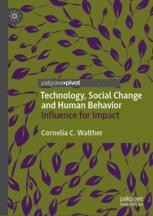
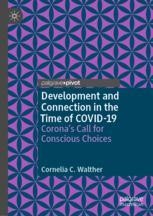
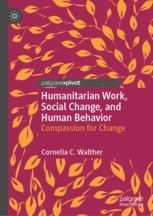
The books link the paradigm to concrete action and the impact that it can have in the humanitarian sector, and by using technology. In the meantime, a book on Change amid COVID-19 came out. This new book opens possibilities to turn the current crisis into an opportunity for positive change. The C-Core (completion, compassion, creativity, cooperation) are introduced in the book.
In addition, the four determinants that shape institutions: priorities, people, positions, programs – the P-Puzzle are looked at.
This book combines theory and concrete suggestions both for policymakers in charge of designing the collective landscape and for individuals who must adapt to, and shape, a new ‘normal’.
Books (2020-2021)
– Technology, Social Change and Human Behaviour. Influence for Impact.
– Development and Connection in the Time of Covid-19. Corona’s Call for Conscious Choices.
– Humanitarian Work, Social Change and Human Behavior. Compassion for Change.
– Development, Humanitarian Aid and Social Welfare. Social Change from the inside Out.
Humus4change Copyright © All rights reserved.